
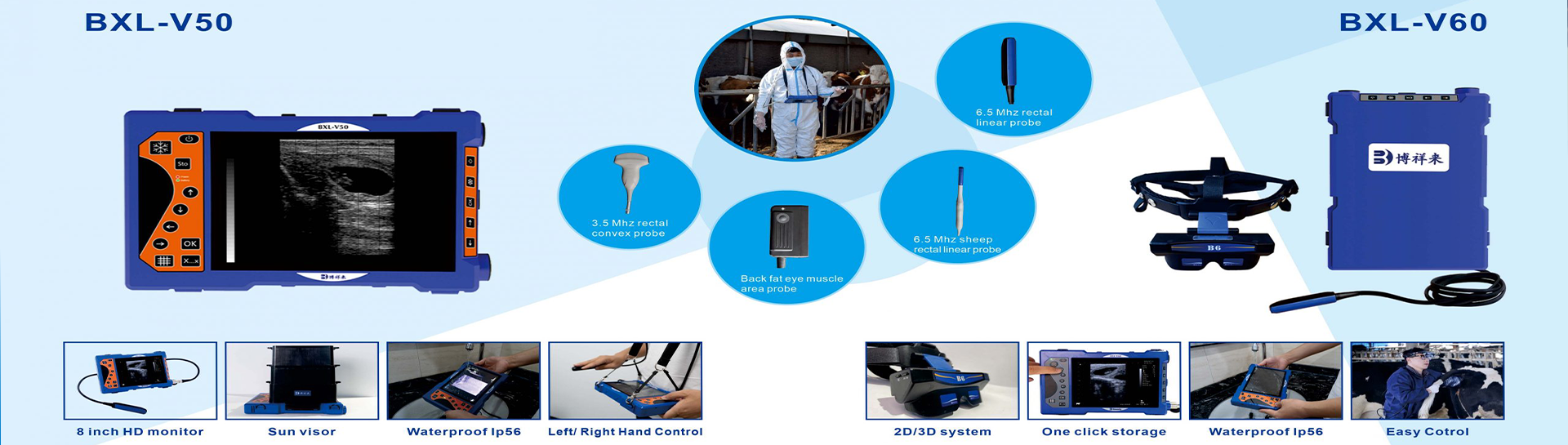
Pregnancy Diagnosis After AI Cattle: How Veterinary ultrasound Improves Reproductive Success
Pregnancy Diagnosis After AI Cattle: A Key Step in Modern Herd Fertility Management
Artificial insemination (AI) has become one of the most effective breeding technologies in the global dairy and beef cattle industry. However, the success of every AI program depends on timely and accurate pregnancy diagnosis after AI cattle. Early confirmation of pregnancy allows farmers, veterinarians, and breeding specialists to identify open cows quickly, optimize rebreeding schedules, and improve overall herd reproductive performance.
Today, portable veterinary ultrasound machines are widely recognized as the gold standard for pregnancy diagnosis after artificial insemination. Compared with traditional rectal palpation, ultrasound provides real-time reproductive imaging, higher diagnostic accuracy, and valuable information about embryo development and reproductive health.
For veterinary clinics, livestock farms, breeding centers, and international distributors, advanced veterinary ultrasound equipment is an essential investment for precision cattle reproduction management.
Why Pregnancy Diagnosis After Artificial Insemination Is Important
Artificial insemination requires careful planning, accurate heat detection, and significant labor investment. Without early pregnancy confirmation, non-pregnant cows may remain unnoticed for weeks, increasing production costs and extending calving intervals.
Early pregnancy diagnosis after AI cattle helps producers:
Identify open cows quickly
Reduce days open
Improve conception rates
Increase reproductive efficiency
Optimize breeding programs
Improve calving intervals
Reduce feeding costs
Enhance herd profitability
Early reproductive management enables dairy and beef producers to make informed decisions that improve long-term production performance.
When Should Pregnancy Be Checked After AI?
Using a high-quality veterinary ultrasound machine, experienced veterinarians can typically confirm pregnancy 28 to 35 days after artificial insemination.
During the examination, ultrasound imaging allows professionals to evaluate:
Pregnancy confirmation
Embryonic vesicle
Fetal heartbeat
Embryo viability
Uterine condition
Ovarian activity
Corpus luteum function
Early placental development
Early diagnosis helps minimize reproductive delays and allows immediate rebreeding of non-pregnant animals.
Why Veterinary Ultrasound Is the Preferred Method
Veterinary ultrasound has become the preferred reproductive diagnostic technology because it provides much more information than manual pregnancy examination.
Real-Time Imaging
Ultrasound creates live images of the reproductive tract, allowing veterinarians to directly observe embryonic development.
Higher Diagnostic Accuracy
Compared with rectal palpation, ultrasound significantly improves the accuracy of early pregnancy diagnosis.
Embryo Viability Assessment
Veterinarians can detect fetal heartbeat and evaluate embryo survival, reducing the risk of undetected embryonic loss.
Reproductive Health Monitoring
Ultrasound also helps identify reproductive disorders that may affect fertility.
Benefits of Portable Veterinary Ultrasound Machines
Portable ultrasound equipment is designed specifically for on-farm reproductive examinations.
High-Resolution Images
Advanced digital imaging technology produces clear visualization of reproductive organs.
Lightweight and Portable
Compact systems are easy to transport between farms and livestock facilities.
Long Battery Life
Rechargeable batteries support continuous field examinations throughout the day.
Fast Diagnosis
Most pregnancy examinations can be completed within only a few minutes.
Digital Image Storage
Integrated image recording and USB export simplify veterinary documentation and breeding records.
Comprehensive Applications Beyond Pregnancy Diagnosis
Modern veterinary ultrasound systems support a wide range of reproductive management procedures.
Artificial Insemination Programs
Monitor follicle development and determine the optimal breeding time.
Ovarian Evaluation
Assess follicular growth and ovarian activity throughout the estrous cycle.
Corpus Luteum Assessment
Evaluate luteal function to support hormone therapy and breeding management.
Embryo Transfer
Select suitable recipient cows and monitor embryo survival after transfer.
Uterine Disease Diagnosis
Identify endometritis, uterine fluid accumulation, and postpartum reproductive disorders.
Fertility Monitoring
Track reproductive performance to improve long-term breeding efficiency.
Essential Features of a Veterinary Ultrasound Machine
tags: