
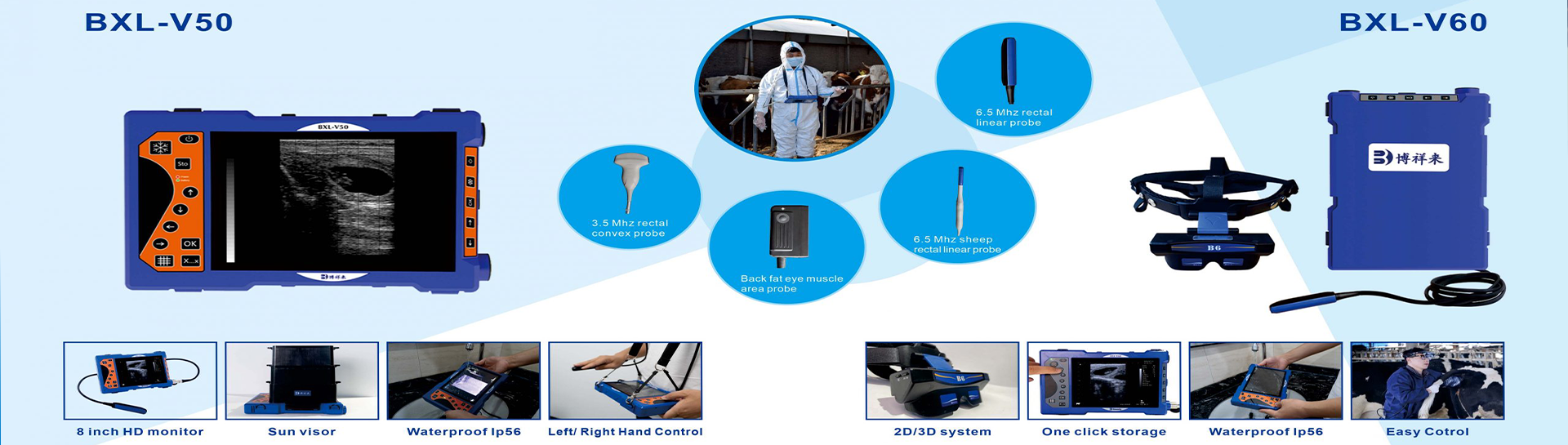
Pregnancy Detection Day 30 Cow: Why 30-Day Ultrasound Diagnosis Is Essential for Modern Cattle Reproduction
Pregnancy Detection Day 30 Cow: Improve Herd Fertility with Veterinary ultrasound
In modern dairy and beef farming, reproductive efficiency is one of the most important factors affecting profitability. Pregnancy detection day 30 cow has become a standard reproductive management practice because it enables producers to identify pregnant and open cows at an early stage. With the help of advanced veterinary ultrasound machines, farmers and veterinarians can make faster breeding decisions, reduce days open, and improve overall herd performance.
Compared with traditional rectal palpation, ultrasound technology provides real-time visualization of the reproductive tract, allowing veterinarians to confirm pregnancy, assess embryo viability, and evaluate uterine health as early as 30 days after breeding or artificial insemination (AI).
As global livestock production moves toward precision farming, portable veterinary ultrasound systems have become indispensable diagnostic tools for dairy farms, beef cattle ranches, breeding companies, and veterinary clinics.
Why Is Pregnancy Detection at Day 30 So Important?
The first month after breeding is a critical period for reproductive management. Detecting pregnancy around Day 30 helps producers identify non-pregnant cows early, allowing them to return animals to the breeding program without unnecessary delays.
Early diagnosis offers several advantages:
Reduce days open
Improve conception rates
Shorten calving intervals
Increase reproductive efficiency
Lower feeding costs for non-pregnant cows
Improve herd fertility management
Reduce economic losses
Optimize breeding schedules
For commercial dairy and beef operations, every day saved in the breeding cycle contributes to greater productivity and profitability.
How Does Veterinary Ultrasound Detect Pregnancy on Day 30?
A portable veterinary ultrasound machine equipped with a high-frequency linear rectal probe produces real-time grayscale images of the cow's reproductive organs.
During the examination, veterinarians can observe:
Embryonic vesicle
Developing embryo
Fetal heartbeat
Uterine fluid
Corpus luteum
Ovarian follicles
Uterine wall condition
Early placental development
These detailed images enable accurate pregnancy confirmation while providing valuable information about reproductive health.
Why Choose Ultrasound Instead of Rectal Palpation?
Although rectal palpation remains widely used, ultrasound offers significant advantages during early pregnancy diagnosis.
Earlier Detection
Ultrasound can reliably detect pregnancy around Day 30, often earlier than manual palpation.
Higher Diagnostic Accuracy
Real-time imaging reduces uncertainty and improves confidence in pregnancy diagnosis.
Embryo Viability Assessment
Veterinarians can observe fetal heartbeat and embryonic movement to evaluate pregnancy health.
Reproductive Organ Evaluation
Ultrasound provides additional information about ovarian function, uterine condition, and possible reproductive disorders.
Reduced Stress
The examination is non-invasive, safe, and causes minimal discomfort when performed by trained professionals.
Benefits of Portable Veterinary Ultrasound Machines
Portable ultrasound systems have become the preferred choice for on-farm reproductive examinations.
High-Definition Imaging
Advanced digital image processing delivers sharp reproductive images with excellent detail.
Lightweight Design
Compact equipment allows veterinarians to carry the scanner easily between farms.
Long Battery Life
Rechargeable lithium batteries support extended field operation throughout the working day.
Digital Data Storage
Built-in memory, USB export, and wireless connectivity simplify image management and clinical record keeping.
Rugged Construction
Durable housing is designed to withstand demanding livestock environments.
Beyond Pregnancy Detection: Complete Reproductive Management
Today's veterinary ultrasound equipment supports many reproductive applications beyond confirming pregnancy.
Follicle Monitoring
Track ovarian follicle development for improved breeding timing.
Corpus Luteum Evaluation
Assess progesterone-producing structures that are essential for pregnancy maintenance.
Artificial Insemination Programs
Improve insemination timing through accurate reproductive monitoring.
Embryo Transfer
Evaluate recipient cows and monitor embryo development after transfer.
Uterine Disease Diagnosis
Identify reproductive disorders such as endometritis, uterine fluid accumulation, and postpartum complications.
Fertility Assessment
Monitor reproductive performance to improve long-term herd productivity.
Essential Features of a Professional Veterinary Ultrasound Machine
tags: